
Dad Burnout Isn’t an Anger Problem: Why Exhausted Fathers Snap
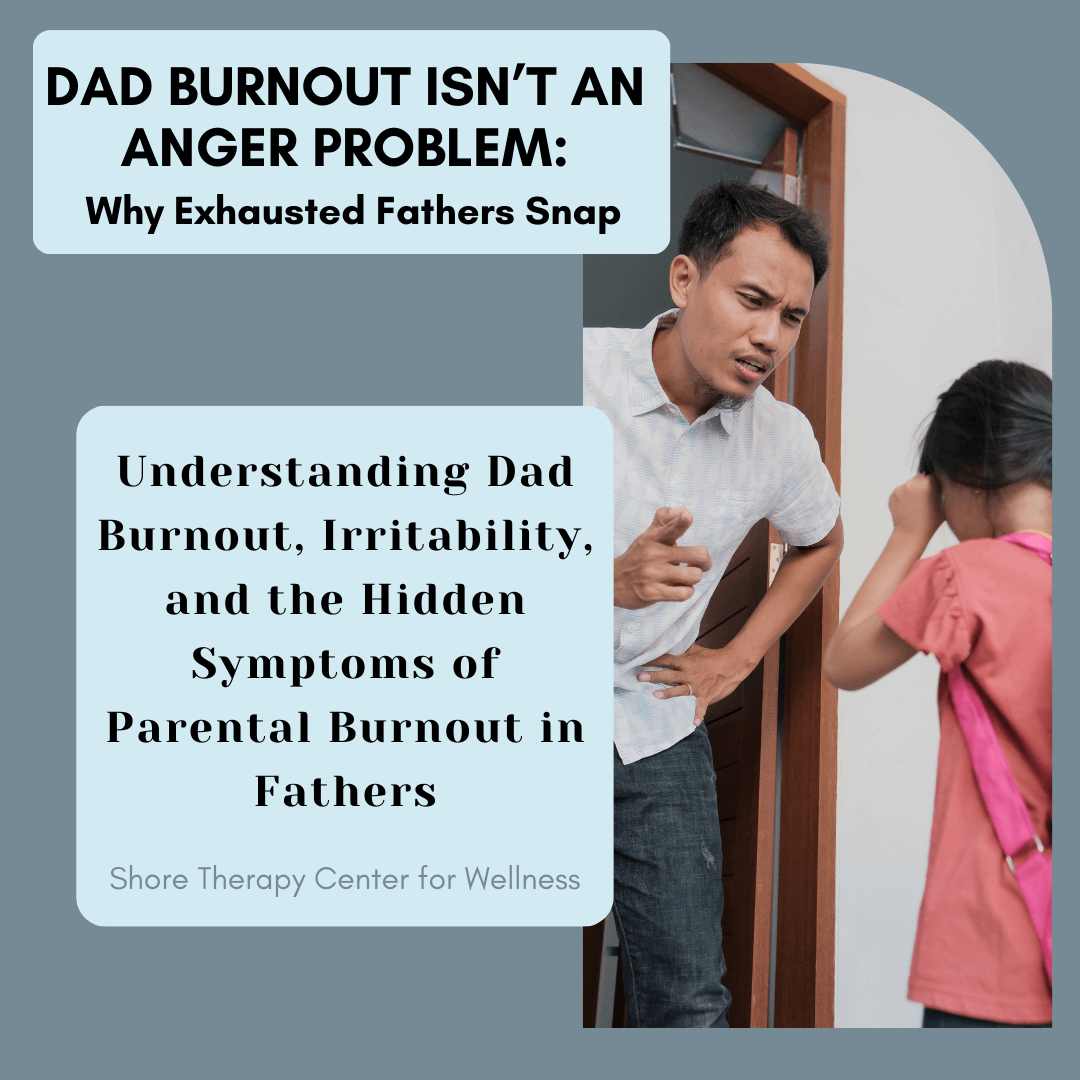
Understanding Dad Burnout, Irritability, and the Hidden Symptoms of Parental Burnout in Fathers
If you’ve found yourself searching phrases like “dads with anger issues” or thinking “my dad is always angry and negative,” you’re not alone, and you’re not wrong to be concerned. But the story is often incomplete. For many fathers, what looks like an anger problem is actually parental burnout: the result of dads trying hard to meet their children’s needs and family’s needs, often with too much pressure, inadequate tools or skills, and not enough support. The chronic stress, relentless responsibility, and inadequate time or ability to recharge leaves dads with overextended nervous systems that slip quickly into fight-flight or into survival mode over time.
Anger, irritability, and snapping aren’t moral failures or personality flaws. They’re signals; these often outsized reactions are the body’s way of saying something is overloaded and needs attention. When demands keep piling up (work pressure, parenting stress, worries about your child’s future) and recovery never quite happens, the nervous system stays on high alert. Over time, that strain shows up as a short fuse, shutdown, or a constant edge. This can be especially common in high-achieving dads who are used to effort leading to results.
This article takes a burnout lens, not a blame lens. We’ll look at how dad burnout develops, why anger is such a common symptom in fathers, and what these reactions are actually communicating about unmet needs and depleted reserves. If you’re wondering whether what you’re experiencing is burnout, or whether it’s time to get clarity, you can start with a brief parental burnout quiz to better understand what your nervous system may be carrying right now.
What Is Depleted Father Syndrome?
Depleted Father Syndrome describes a pattern many exhausted dads recognize immediately but rarely have language for. It’s what happens when ongoing parenting demands, work pressure, emotional responsibility, and worry about a child’s well-being outpace a father’s capacity to recover. Over time, this imbalance shows up as parental burnout; often expressed through irritability, anger, emotional withdrawal, or a constant sense of being on edge.
In clinical terms, depleted father syndrome overlaps significantly with parental burnout symptoms: chronic exhaustion, feeling emotionally drained, reduced sense of effectiveness as a parent, and changes in mood or reactivity. What makes it different for many fathers is how these symptoms show up. Rather than naming overwhelm or depletion, dads are more likely to be labeled, or to label themselves, as having “anger issues,” being negative, or being hard to live with. Often times, they reach out for therapy support only after their partner has demanded that they address their anger and explosiveness; the burnout underneath often goes unseen.
Fathers are also under-identified and under-supported when it comes to parent burnout. Many dads have been socialized to push through stress, minimize emotional needs, or focus on “fixing the problem.” When parenting feels urgent and high-stakes; I have to get my kid to do their homework, get off the iPad, go to school, make friends, be okay; dads may cope with parenting demands by pushing down their emotions or numbing out to their emotional experiences; making it hard to notice and respond to fatigue, aggravation, or frustration, and setting the stage to become overwhelmed by anger when the nervous system imbalance hits a fever pitch. The constant pressure can keep the nervous system locked in survival mode. Over time, Depleted Dad Syndromehelps explain why exhausted fathers snap: not because they don’t care, but because their internal resources have been ignored, de-prioritized, or stretched past capacity for too long.
Dad Burnout and Anger
Anger can be a common and often misunderstood symptom of burnout, especially in fathers. In the context of parental burnout, anger rarely shows up as one big explosive moment out of nowhere, although it can. More often, it appears as chronic irritability, a short fuse, emotional reactivity, or feeling constantly on edge. Many exhausted dads describe feeling like they’re “snapping over nothing,” even though the underlying stress has been building for a long time.

It’s important to distinguish between how anger is expressed and what’s actually causing it. The outward expression; raised voices, harsh tone, shutting down, or sudden rage; is what others notice. But the root cause is usually something deeper: prolonged stress, emotional overload, lack of recovery, and the pressure of carrying responsibility without enough support. When burnout is the driver, anger isn’t about losing control; it’s about having too little capacity left to monitor, regulate, or meet emotional needs.
Anger also tends to show up before shutdown. For many fathers, irritability and rage are early warning signs that the nervous system is still trying to cope. When that effort becomes unsustainable, anger may give way to withdrawal, emotional numbness, or disengagement. In this sense, anger can be understood as a last-ditch attempt to stay functional; an effort to push through when rest, relief, or support hasn’t been available.
Parental Burnout Symptoms in Fathers: How to Spot an Exhausted Dad
Parental burnout doesn’t always look the way people expect; especially in fathers. Rather than openly naming overwhelm or asking for help, many dads experience burnout as a gradual erosion of emotional, mental, and physical capacity. Because these changes often unfold slowly, they’re easy to miss or misinterpret until the strain becomes impossible to ignore.
Emotionally, parental burnout in fathers often shows up as persistent irritability or a noticeably shorter fuse with their children, partner, or in other relationships. Small frustrations feel disproportionately intense. At the same time, many exhausted dads also report periods of emotional numbness or detachment; feeling flat, disconnected, or “checked out” after snapping or reacting strongly; withdrawing or pushing connection away. These shifts aren’t contradictions; they’re two sides of a nervous system stretched beyond its limits.
Cognitively, burnout tends to narrow perspective. Fathers may become increasingly negative, stuck in loops of worry, self-criticism, or rumination about their child’s behavior or future. Thoughts like “This shouldn’t be this hard,” “I’m failing,” or “If I don’t fix this now, everything will fall apart” become harder to shut off. This mental load adds to exhaustion and makes it more difficult to access flexibility, patience, or creative problem-solving.
Physically, parental burnout takes a real toll. Chronic fatigue that doesn’t improve with rest, muscle tension, headaches, sleep disruption, and a constant sense of being “on edge” are common. An exhausted dad may feel wired but depleted at the same time; running on adrenaline while already emptied out. Together, these emotional, cognitive, and physical symptoms reflect a system under prolonged stress, not a lack of effort or care.
Dad Burnout Anger Symptoms You Might Not Recognize
When people think about anger in fathers, they often picture obvious outbursts; yelling, slamming doors, losing control. But in the context of dad burnout, anger is often quieter, more chronic, and easier to explain away. Many of the fathers I work with in therapy or who have taken my parent burnout course are surprised to realize that what they’ve been calling stress, frustration, or just being “tired” are actually burnout-related anger symptoms.
One common sign is snapping over small things. A child asking the same question twice, a sibling argument that drags on, a child’s vocal stims or physical movement that wears on the nervous system, or a minor mess can suddenly feel intolerable. I hear dads describe moments like: “I know it wasn’t a big deal, but I just lost it,” or “It felt like the last straw, even though nothing that serious happened.” These reactions aren’t about the moment itself; they’re about how little reserve is left.
Another frequently missed symptom is withdrawal masked as “needing space.” After reacting sharply, many exhausted dads pull back to avoid making things worse. They spend more time alone, stay busy with work, screens, or chores, or emotionally disengage at home. From the outside, this can look like distance or disinterest. From the inside, it often feels like self-protection: “If I don’t step away, I’m going to say something I regret.”
Chronic negativity is another red flag. Fathers in burnout often describe a steady undercurrent of pessimism; expecting things to go wrong, feeling irritated before anything even happens, or assuming conflict is inevitable. As a psychologist who specializes in parental burnout, I often hear dads say they don’t recognize themselves anymore: “I used to be more patient,” or “Everything just feels heavier now.” These patterns aren’t signs of becoming an angry person; they’re signals that an exhausted dad’s nervous system has been running without enough relief for too long.
“My Dad Is Always Angry and Negative”
When burnout is driving a father’s anger, it doesn’t stay contained inside him; it shows up in the emotional climate of the home. I often hear adult clients describe growing up with a dad who was “always stressed,” “constantly irritated,” or “never really relaxed.” At the time, they didn’t have language for parental burnout. What they experienced instead was unpredictability, tension, and the sense that one wrong move could set something off.

For children, this environment is confusing. Kids are wired to make meaning out of what they experience, and when a parent seems chronically angry or negative, they often turn that confusion inward. Many of the adults I work with remember assuming they were the problem when their father displayed anger; that they were too much, too needy, or somehow defective. Even when a father’s frustration has nothing to do with his child’s worth, kids often internalize the message as “I’m a burden” or “If I were easier, things would be better.” That belief can linger long after childhood.
This is why it’s so important to understand dad burnout through a capacity lens, not a care lens. An exhausted father snapping or withdrawing is not a sign that he doesn’t love his child or doesn’t want to be present. It’s a sign that his system is depleted and unsupported. The hopeful part is that children don’t need perfect parents; they need repair. Naming stress, reconnecting after rupture, and rebuilding moments of safety go a long way in protecting relationships.
In many cases, this isn’t just about frustration; it’s about trying to follow parenting approaches that don’t actually work for your child.
That disconnect can build pressure over time.
Here’s a deeper look at why that happens: why standard parenting advice fails neurodivergent families.
Resourcing dads matters, not just for their own well-being, but for the health of the entire family. When fathers get restorative time, meaningful support, and relief from relentless pressure, they’re far more able to show up as the steady, engaged, and caring parents they want to be; for their children and for their partners, if they have one. Burnout is not a life sentence; with support, capacity can be rebuilt, and relationships can heal.
Dads With Anger Issues at Home: Effects of Growing Up With an Angry Father
Growing up with an angry or chronically stressed father can shape a child’s nervous system in lasting ways; especially when that anger is unpredictable. When kids don’t know which version of a parent they’re going to get, their bodies learn to stay on alert. They may become hyper-aware of tone changes, facial expressions, or small shifts in mood, scanning constantly for signs that something is about to go wrong. Over time, this emotional unpredictability can create a baseline of anxiety, even in otherwise loving homes.
Many adults I work with describe learning early how to minimize themselves to keep the peace. They learned to stay quiet, be “easy,” or anticipate others’ needs in order to avoid triggering anger. This kind of hypervigilance isn’t a conscious choice; it’s a survival strategy and a trauma response. When anger or irritability are frequent, children can come to associate closeness with risk, leading to fear, people-pleasing, or emotional distance later in life.
From a trauma-informed perspective, this is also where hope and interruption live. As a trauma therapist, I see moments like this as powerful opportunities to disrupt intergenerational patterns. When fathers are supported in understanding their anger as a sign of burnout and depletion, not as a personal failing, they can begin to meet their own care needs more intentionally. As regulation increases, so does emotional availability.
Just as important, children don’t need perfect parents. They need parents who can notice when things go sideways and repair. When dads name stress, take responsibility for their reactions, and model healthy boundaries and self-care; building the skills that they need to monitor, support, and regulate their nervous system, they show their children what it looks like to recognize limits and respond with compassion. Repair builds safety, and safety; not perfection; is what protects kids and helps break cycles of burnout and reactivity across generations.
Frequently Asked Questions About Dad Burnout and Anger
Is irritability a symptom of burnout?
Yes. Irritability is often one of the earliest and most overlooked symptoms of parental burnout, especially in fathers. From a nervous system perspective, irritability signals that stress is beginning to exceed capacity. It’s a sign of low tolerance and reduced flexibility, not a character flaw. Many dads cope by pushing through, muting the signal, or telling themselves they’re “just tired,” which allows depletion to deepen.
Is anger a symptom of burnout?
Yes. When irritability is ignored and stress continues to build, burnout often shows up as anger or emotional reactivity. At this stage, the nervous system is more activated and moving into fight–flight. Anger may slip out as snapping, yelling, or harsh tone and is often explained away as a reaction to a specific situation; the mess, the argument, the refusal. But underneath, anger is still a signal that the system is overloaded and struggling to self-regulate.
Is rage a symptom of burnout?
It can be. Rage is less common, but it’s a serious sign of nervous system overwhelm. When prolonged stress, emotional suppression, and lack of recovery continue unchecked, the nervous system may move into extreme protective responses. What feels like “uncontrollable rage” is often a last-ditch attempt to release pressure or restore a sense of control when other coping strategies have failed. This isn’t a loss of morals or values; it’s a sign that the system has been pushed far past its limits and needs support, not shame.
How to Deal With Dad Burnout Anger
When anger is fueled by burnout, the most effective response isn’t trying harder to control it, it’s changing the conditions that are exhausting the system in the first place. That means reducing demands before focusing on behavior. If a father is chronically depleted, asking him to be more patient, calmer, or less reactive without addressing load and recovery is like expecting your car to keep driving on an empty tank. Relief comes from scaling back where possible, loosening unrealistic expectations, and creating real opportunities for rest and nervous-system recovery.
This is also where support matters more than discipline; both for dads and for kids. Burnout-driven anger doesn’t respond well to shame, self-criticism, or rigid rules. It responds to being understood as a capacity issue. When fathers receive validation, practical support, and permission to have limits, their ability to self-regulate improves. And when kids experience a parent who is more regulated and present, behavior often starts to shift organically, without needing to escalate control or consequences.
Most importantly, dad burnout is not a permanent state. With the right supports in place, fathers can reconnect with themselves and with the kind of parent they want to be. Understanding anger as a signal of depletion, rather than a character flaw, opens the door to meaningful change. This broader framework is often described as Depleted Dad Syndrome, a way of understanding how chronic stress impacts fathers and what exhausted dads need most in order to recover capacity, restore connection, and show up at home with more steadiness and care; and with less anger and volatility.
There is real hope here. When burnout is named and addressed, fathers aren’t just trying to get back to who they were; they’re often learning skills and supports they were never taught in the first place. Many dads are building deep emotional awareness, regulation tools, and boundaries for the first time, and growing into versions of themselves that feel more grounded, more connected, and more aligned with the kind of father, and person, they want to be.
When anger is understood as a signal of depletion rather than a personal failure, it becomes possible to respond with curiosity instead of shame. This is the heart of Depleted Dad Syndrome: recognizing how chronic stress and unmet support needs impact fathers, and understanding what exhausted dads need most in order to recover capacity, restore connection, and show up at home with more steadiness and care.
If you’re unsure whether what you’re experiencing is burnout, or how close you might be to your limits, a brief parental burnout quiz can help clarify what your nervous system has been carrying and what kind of support may be most helpful next.
